An airless pump bottle is a type of cosmetic packaging designed to minimize direct contact between the formula and external air during use. Unlike traditional lotion pump bottles, which rely on a dip tube to draw out the contents, airless systems typically utilize a movable piston or a flexible inner pouch to push the formula toward the pump head. This structure helps reduce repeated air exchange, allows for more controlled dispensing, and improves the product evacuation rate (the percentage of the product that can be dispensed).
For cosmetic brands, an airless pump bottle is more than just a premium-looking container; it is a packaging solution worth considering when formula protection, precise dispensing, product positioning, and user experience are key priorities. Selecting the right design requires a comprehensive evaluation of the formula, internal structure, materials, filling method, and target market.
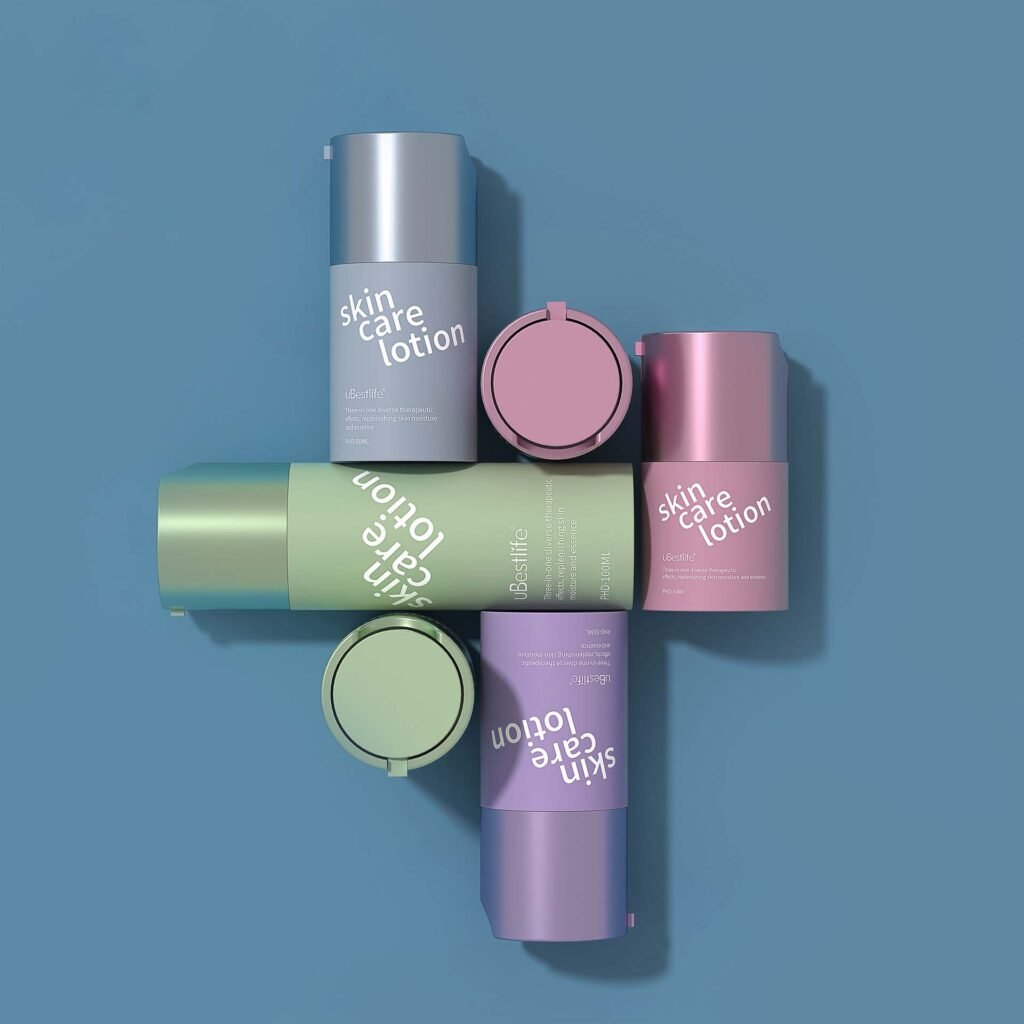
How do airless pump bottles differ from standard lotion pump bottles?
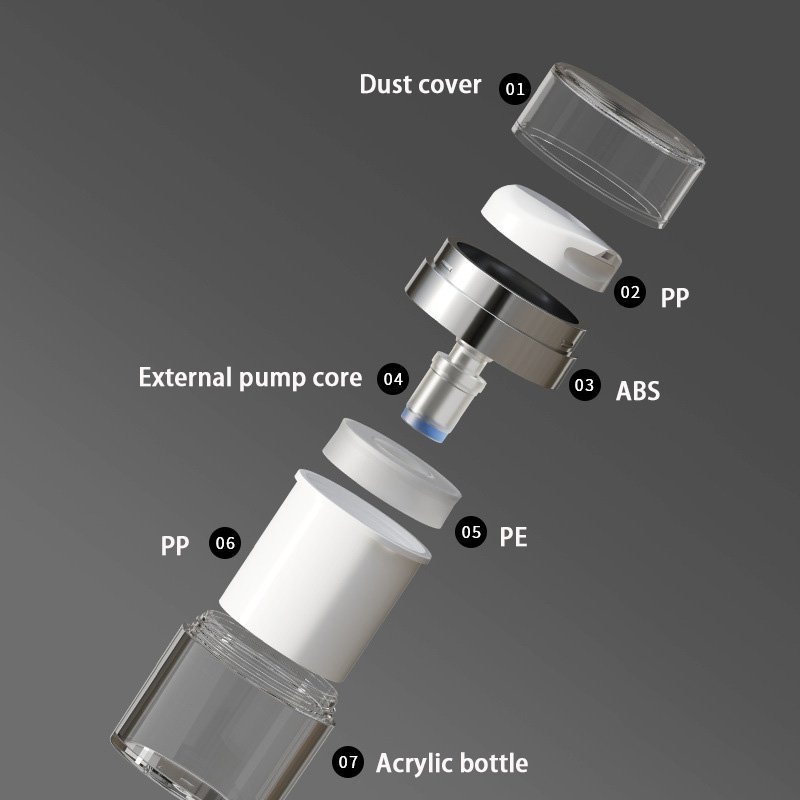
The primary difference between an airless pump bottle and a traditional lotion pump bottle lies in how the contents are transported within the container.
Traditional pump bottles typically use a dip tube. When the pump head is pressed, the formula is drawn up through the tube. As the product is dispensed, external air usually enters the bottle to fill the space left behind.
Airless pump bottles employ a different internal structure. Instead of relying on a traditional dip tube, they use a piston or a flexible inner pouch that shifts as the formula is dispensed. This design minimizes the entry of external air into the product storage chamber during normal use.
The term “airless” does not imply that an absolute vacuum is created inside the packaging, nor does it mean the packaging is sterile or entirely free from oxygen exposure. Rather, it describes a dispensing system engineered to reduce the exchange between the product and the outside air. The actual level of protection depends on the packaging structure, seals, formula, filling process, and storage conditions.
What are the main components of an airless pump bottle?
An airless pump bottle functions as an integrated packaging system. All individual components must work in coordination to achieve the intended dispensing performance.
| Component | Primary Function | Aspects for Brands to Evaluate |
| Outer Bottle | Houses and protects the internal structure, while also determining the appearance of the packaging | Material, shape, capacity, decoration, and durability |
| Pump Head / Dispensing Head | Actuation and dispensing mechanism | Actuation force, dosage per stroke, and user comfort |
| Pump core and valves | Control of product flow through the dispensing channel | Formula compatibility, priming performance, and dispensing consistency |
| Piston or inner bag | Moves or contracts as the product is dispensed | Sealing performance, movement characteristics, and product evacuation rate |
| Connecting ring and sealing components | Connects and secures the pump head assembly | Fit, assembly, sealing, and visual consistency |
| Protective cap | Protects the actuator during storage and transport | Fit, appearance, and prevention of accidental actuation |
Component structures can vary between different suppliers and models. Brands should request technical drawings and samples for the specific model from the supplier, rather than assuming that all airless bottles share the same internal structure.
What are the common types of airless pump bottles?
There is no single structural design for airless packaging. Two common types are piston-based airless bottles and pouch-based (bag-in-bottle) airless bottles.
Piston-based airless bottles
In a piston-based airless bottle, a movable disc or platform is positioned beneath the product. As the contents are dispensed, the piston gradually moves upward, tracking the level of the remaining product.
This structure is widely used in skincare packaging and allows for controlled dispensing when paired with appropriate formulations. The outer bottle can be designed in a variety of shapes, sizes, colors, and decorative finishes.
Brands should carefully consider factors such as the smoothness of the piston’s movement, the viscosity of the product, compatibility with filling processes, and the amount of product that may remain in the bottle after standard use.
Pouch-based (bag-in-bottle) airless bottles
In a pouch-based system, a flexible inner pouch is placed inside an outer bottle. As the pump dispenses the formulation, the inner pouch gradually collapses to accommodate the reduction in the volume of the product inside.
The outer bottle maintains the overall shape of the packaging, while the inner pouch holds the formulation. Depending on the specific design, this structure offers flexibility in terms of visual aesthetics and the choice of materials that come into contact with the product.
Before approving the packaging, brands should verify the material of the inner pouch, the connection mechanism, the filling method, and its compatibility with the intended formulation.
| Items | Piston structure | Inner bag structure |
| internal structure | There is a movable piston under the product | Flexible inner bag |
| Method of volume change | Piston moves upward | Inner bag gradually contracts |
| Shape of outer bottle | Generally remains stable | Generally remains stable |
| Key Development Checkpoints | Piston movement, sealing, and product residue | Inner bag compatibility, sealing, and filling |
| Selection Rationale | Formulation and packaging performance requirements | Formulation and packaging performance requirements |
Neither structure is inherently superior or inferior for all products. The right choice depends on the formulation, packaging design, production process, and the results of performance testing.
Which products are suitable for airless pump packaging?
Airless packaging is generally a good option for skincare and personal care products that require controlled dispensing and minimal repeated exposure to air.
Potential applications include:
- Facial serums and treatment essences
- Moisturizing lotions and creams
- Eye care formulations
- Premium lotions and targeted treatment products
- Certain sunscreens and sun-care formulations
- Other formulations compatible with the pump mechanism and internal packaging materials
However, airless bottles are not automatically suitable for every formulation. Products with very high viscosity, those containing particles, or those with specific dispensing requirements may necessitate a different pump design or an alternative type of packaging.
Before selecting packaging, brands should provide suppliers with details such as formulation viscosity, ingredients, desired dosage per pump, and filling conditions. Testing with the actual formulation is far more reliable than choosing a bottle based solely on its appearance.
What is the difference between airless pump bottles and traditional lotion pump bottles?
While both types of packaging can dispense liquid or semi-fluid products, they are suited to different product requirements and brand positioning.
| Item | Airless Pump Bottle | Traditional Lotion Pump Bottle |
| Product Dispensing Mechanism | Typically uses a piston or an internal pouch | Typically uses a dip tube |
| Air Exchange During Use | Designed to minimize air entry into the product storage chamber | Typically allows air to enter the bottle to replace the dispensed product |
| Dispensing Control | Depending on the pump head design, controlled dispensing can be achieved. | The dispensed volume is determined by the pump head specifications. |
| Internal Structure | Features more components; the container structure is more specialized. | Typically, the structure is simpler |
| Filling Requirements | Requires compatible filling and assembly processes | Typically employs a standard filling workflow |
| Cost Considerations | Generally higher costs due to the large number of components | Often more economical for suitable products |
For high-end facial serums, airless packaging can offer a more controlled dispensing experience and a sophisticated, high-tech aesthetic. For large-volume body lotions with good stability, a traditional pump bottle may be a more cost-effective choice.
The goal is not necessarily to choose the most complex packaging structure, but rather to select a format that effectively addresses the specific needs of the product or the user experience.
How should a brand select the right airless pump bottle?
The appropriate airless packaging should be determined through a systematic product development process.
Start with the formula: Define the product’s viscosity, ingredient compatibility, sensitivity to the external environment, and the desired dosage per pump. This information helps identify the specific pump mechanisms and internal structures that should be evaluated.
Define the product positioning: High-end facial care products may require compact, refined packaging, while everyday moisturizing lotions might prioritize larger capacity and an easy-to-press pump. The bottle shape, color, surface finish, and decorative elements should all align with the brand’s image.
Review the filling process: Different airless bottle models may require different filling methods. Brands and their contract manufacturers should confirm the filling direction, equipment compatibility, assembly requirements, and operational startup procedures prior to production.
Test the complete package: Evaluate dispensing consistency, seal integrity, pump return mechanism, formula compatibility, storage stability, and the amount of residual product left in the container. Testing should be conducted using the actual formula and packaging that closely mirrors the final mass-produced version.
Why should brands collaborate with airless pump bottle manufacturers?
Working with an experienced packaging manufacturer allows a brand to evaluate more than just the bottle’s appearance. A qualified supplier should be able to provide guidance on structural options, component configurations, material selection, decorative techniques, and production requirements.
For custom projects, a brand may need to coordinate the following:
- Bottle capacity, dimensions, and shape
- Internal structure (e.g., piston-based or pouch-based systems)
- Pump dosage and actuator (press-head) design
- Material and color selection
- Surface decoration techniques, such as screen printing or hot stamping
- Component assembly and filling compatibility
- Sample approval, minimum order quantities (MOQs), and production lead times
An experienced airless pump bottle manufacturer can help a brand translate packaging concepts into technical specifications that are ready for production. The final solution must be validated using the actual formulation and filling process.
Conclusion
Airless pump bottles are a type of cosmetic packaging system designed to minimize the exchange of air between the product storage chamber and the external environment during use. Common designs utilize a movable piston or a flexible inner pouch, combined with a pump assembly and a compatible outer container to dispense the product.
For cosmetic brands, the value of airless packaging lies in how well its structure aligns with the specific formulation, dispensing requirements, product positioning, and manufacturing processes. It is not the optimal choice for every product, nor does it guarantee sterility or the complete elimination of oxidation.
As an upstream supplier of airless pump bottles, cosmetic tubes, and sunscreen packaging, we provide B2B brands with expert assessment regarding packaging structures, materials, and customized solutions. By reviewing samples and validating the complete packaging system prior to mass production, brands can select packaging that better complements product performance, strengthens brand identity, and enhances the user experience for consumers.