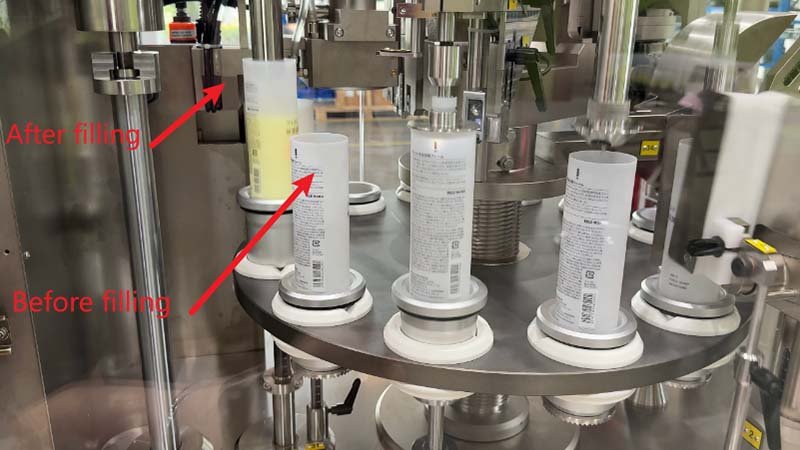
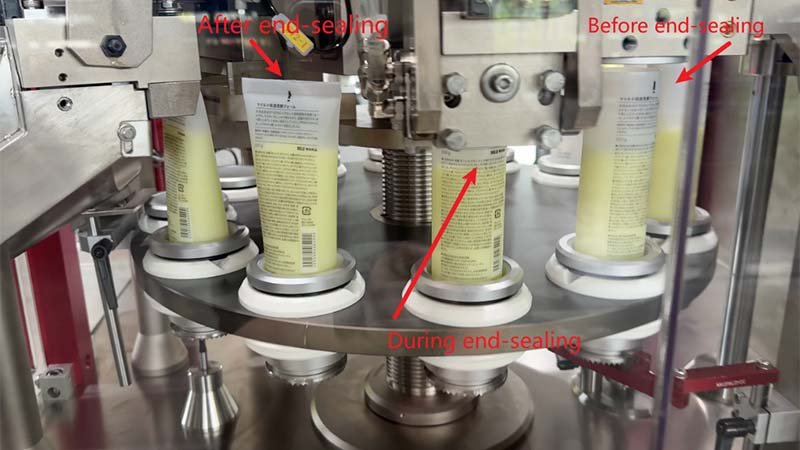
Cosmetic tubes are typically filled from their open end—the end opposite the dispensing cap or nozzle. Once filled, this end is sealed to secure the formula inside. On a standard production line, empty tubes are loaded into the equipment and positioned, filled with a precise amount of product, and then sealed—either via heat sealing or folding, depending on the tube material. Additional steps may include trimming the sealed end, applying production codes, conducting quality inspections, and finally, secondary packaging.
For cosmetic brands, contract fillers, and packaging procurement professionals, understanding this process is essential, as the filling method must align with the specific construction of the chosen tube. Plastic and laminate tubes generally require a heat-sealing process tailored to their composition, while collapsible aluminum tubes are typically closed by folding or crimping. The exact technique depends on the tube design and the equipment being used.
As an upstream packaging manufacturer, we supply empty cosmetic tube packaging—not the finished, filled skincare products. Our role is to assist procurement teams in defining the tube’s structure, dimensions, opening type, material, decorative finishes, and sealing requirements before the packaging reaches the filling facility.
A typical cosmetic tube filling process involves the following steps:
- Tube Preparation: Verifying the tube type, dimensions, cap, and specified aesthetic requirements.
- Loading and Positioning: Placing each tube in the correct orientation; this may include aligning printed graphics.
- Filling: Dispensing the required quantity of the formula through the open end of the tube.
- Sealing or Folding: Closing the end of the tube using a method appropriate for its material.
- Trimming: Refining the sealed edge or completing any necessary folding steps.
- Batch Coding: Printing or embossing production codes as required.
- Inspection and Packaging: Checking the filled tubes before placing them into outer cartons or completing other secondary packaging.
Specific procedures may vary depending on the tube construction and the production line configuration. Therefore, the production process should be verified using actual packaging samples, rather than relying solely on generalized filling procedures.
Why does the material of a tube affect the filling and sealing process?
Not all cosmetic tubes are sealed using the same method. The material and construction of a tube dictate which sealing process can be used, as well as what preparations the filling facility must make in advance.
Plastic and Polyethylene (PE) Tubes
Plastic tubes—including many made from polyethylene (PE)—are typically filled through their open ends and then sealed using a compatible heat-sealing system. Depending on the equipment and the tube specifications, the process may involve heating the tube tail, forming the seal, cooling it, and trimming away any excess material.
The tube must be compatible with the chosen sealing parameters. If the settings are incorrect or the material combination is unsuitable, issues such as insufficient seal strength, deformation of the tube tail, or an inconsistent appearance of the seal may occur. Therefore, the final process should always be validated using the specific tubes and filling equipment intended for production.
Laminated Tubes
Laminated tubes are constructed from multiple layers of material. Depending on the specific design, they may include an inner layer that comes into contact with the formula, a barrier layer, and an outer layer suitable for printing or surface decoration.
Many laminated cosmetic tubes are filled through their open ends and sealed using a process tailored to their specific multi-layer structure. The appropriate process parameters depend on both the tube construction and the sealing equipment. Purchasers should not assume that all laminated tubes require identical sealing conditions.
When sourcing laminated cosmetic tubes, confirm the specific material structure with the packaging manufacturer and provide this information to the filling facility before conducting any production trials.
Aluminum Tubes
Collapsible aluminum tubes generally require a different sealing method. After filling, the open end is typically closed by folding and crimping, rather than through the heat-sealing process commonly used for plastic tubes.
The number and shape of the folds, the placement of any codes, and the final appearance of the tube tail should all be determined based on the specific tube design and the filling equipment. This distinction is particularly important when a brand uses multiple types of packaging materials within the same product line.
What happens at each stage of a tube-filling production line?
A tube-filling production line is an interconnected process—it involves much more than simply dispensing a product into a container through a filling nozzle.
Tube Loading and Positioning: Empty tubes can be loaded into the equipment manually or via an automated feeding system. The machine then positions each tube for the filling process. For pre-printed tubes, a positioning system may use registration marks to ensure that the design on the front of the finished tube faces the desired direction.
Filling: A filling nozzle dispenses the formulation into the tube through its open end. The nozzle type, fill volume, and machine parameters must be carefully matched to both the product and the specific packaging format. It is critical that the product does not contaminate the area intended for sealing, as any residue left on the tail end can compromise the integrity of the seal.
Tail Sealing: Once filled, the tubes move to the sealing station. Depending on the tube construction, this may involve heat sealing, other validated sealing methods, or—in the case of aluminum tubes—mechanical folding.
Trimming and Coding: The sealed ends may be trimmed to achieve a more uniform appearance. Batch numbers, production codes, or other essential information can be printed or embossed in designated locations.
Inspection and Secondary Packaging: Before the tubes are packed into cartons or moved to the next stage of production, they are inspected for visible defects, seal quality issues, unclear coding, or any other quality criteria previously agreed upon by the parties involved.
Understanding this workflow helps brands recognize that specifications for filling, sealing, and packaging should be discussed holistically, rather than treated as separate, unrelated decisions.
Why are the orientation of printed designs and the design of the tube tail important?
While print designs are typically finalized during the packaging development phase, the filling process can influence how these designs ultimately appear on the finished tube.
If a tube features a logo, a product name on the front, decorative elements, or requires specific visual alignment, the production team may need to orient the tubes correctly before filling. By using registration marks (positioning marks), the equipment can identify the intended placement of the design.
The open end (tail) of the tube must also provide sufficient space for the chosen sealing method. Since the sealing or folding process consumes a portion of the tube’s total length, the actual usable filling space and the final aesthetic appearance should be carefully considered during the development phase.
Before mass production begins, buyers should confirm the following:
- The orientation of the printed design (front-facing side)
- The placement of registration marks
- The required tail length and the appearance of the final seal
- The positioning of batch or date codes
- Specifications for the cap, shoulder, and dispensing orifice
- Approved samples to serve as a reference for production
These details are particularly critical for custom cosmetic tube packaging, as bespoke printing, unique shapes, and specialized decorative techniques may introduce additional production constraints.
Common Tube-Filling Issues and What to Check
When filled tubes fail to meet expectations, the cause may stem from the formulation, the packaging materials, the equipment parameters, or the interplay between them.
Product residue at the tail end: If product remains in the sealing area, it can compromise the quality of the seal. The filling process—specifically the fill volume and the movement of the filling nozzle—should be managed to keep the designated sealing area as clean as possible.
Insufficient or inconsistent seal strength: Verify that the tube material is compatible with the chosen sealing method and that the process has been validated for that specific tube type. Never assume that the same equipment settings will work for all tube constructions.
Misaligned printed graphics: Check the orientation of the tubes, the positioning of registration marks, and the equipment’s alignment system. The placement of graphics should be verified using representative, actual samples.
Deformation at the tail end: Examine the tube material, the sealing or folding method, and the relevant process parameters. The specific corrective actions will depend on the tube’s construction and the nature of the defect.
Inconsistent appearance of finished products: Ensure that tube dimensions, decorative requirements, sealing specifications, and acceptance criteria are clearly documented. Approved samples provide a consistent reference for both the brand owner and the filling facility to use during inspections.
When issues arise, adjusting equipment parameters before verifying packaging specifications can often lead to new defects. A systematic review of the tubes, equipment, and production process is generally more effective for identifying the root cause of a problem.
What Should Brand Owners Confirm with Cosmetic Tube Manufacturers?
A successful filling trial begins well before the tubes reach the production line. Brand owners should communicate both the intended use and the production requirements to both the packaging supplier and the filling facility. Key aspects to confirm include:
- Tube material and construction (e.g., PE, laminate, or aluminum)
- Tube diameter, length, nominal capacity, and orifice/nozzle specifications
- Cap or closure type, and the compatibility of all components
- Decorative finishes, print orientation, and areas designated for coding
- The filling and sealing methods intended for use by the manufacturing facility
- Sample approval, along with any necessary functional or compatibility testing
- Outer carton configuration, packaging requirements, and order quantities
An experienced cosmetic tube manufacturer can assist in defining packaging specifications and identifying the specific details that must be finalized before production begins. Nevertheless, the filling facility must still validate its filling and sealing processes using the actual formulation, the specific packaging, and the production equipment itself.
If you are developing a new tube-based packaging solution, it is advisable to request samples early and schedule a trial run—using the actual filling equipment—well before full-scale production. This is particularly beneficial when a project involves new materials, specialized tail-end treatments, custom decorations, or non-standard tube dimensions.
Conclusion
Filling cosmetic tubes involves more than simply placing a formula into an empty container. The tubes must be correctly oriented, filled through the open end, sealed using a method appropriate for the material, and then trimmed, coded, and inspected before proceeding to secondary packaging.
For brands and contract fillers, the key lies in aligning packaging specifications with the filling production line from the very start of the project. Confirming details such as tube construction, print orientation, tail-end design, sealing requirements, and sample acceptance criteria in advance helps prevent avoidable production issues, ensuring a smoother transition from packaging development to mass production.
As a supplier of plastic cosmetic tube packaging and other cosmetic packaging materials, we assist our B2B clients in evaluating empty tube solutions and finalizing the specific packaging details required for their filling projects.