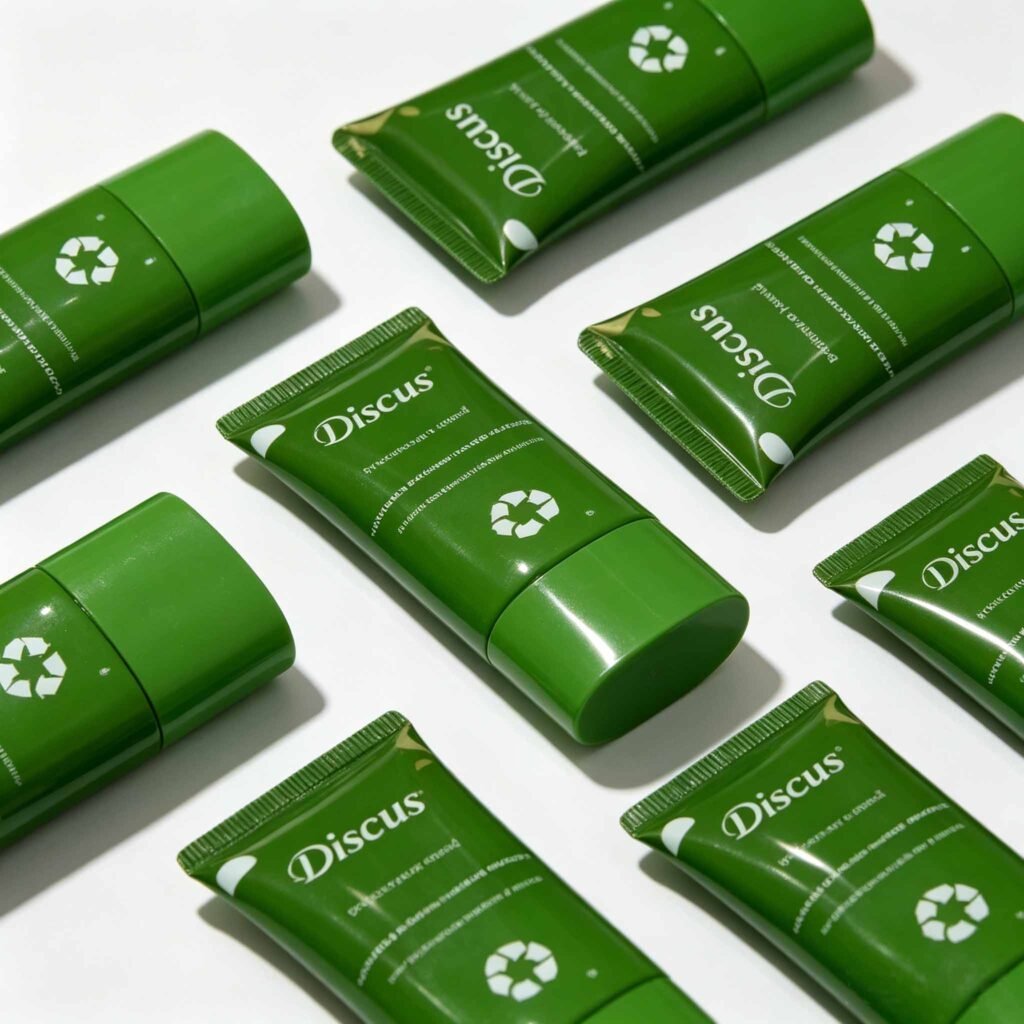
Cosmetic tubes can be recyclable, but their suitability for recycling depends on more than just the material used for the tube body. Factors such as the shoulder, cap, barrier layer, color masterbatch, adhesives, and surface decorations can all influence how the entire package performs within a recycling system. For beauty brands developing new products, choosing a tube designed with recyclability in mind requires evaluating the complete packaging structure—rather than simply selecting a material labeled as PE or PP. While mono-material structures may offer certain advantages, some multi-layer structures require further assessment. Most importantly, the recyclability of a package should be evaluated in the context of the collection, sorting, and recycling infrastructure available in the product’s target market.
What factors determine whether a cosmetic tube is recyclable?
A cosmetic tube is a complete packaging system. It typically consists of a flexible tube body, a shoulder (or head), and a cap. Some designs also incorporate barrier layers, sealing membranes, labels, coatings, and decorative elements.
Even if the main body of the tube is made from recyclable plastic, other components can affect the compatibility of the entire package with recycling processes.
For example, pairing a PE tube body with a cap made from a different type of plastic can create material compatibility issues. Similarly, the inclusion of a metal barrier layer can make it difficult for the entire structure to be processed through conventional plastic recycling streams.
Therefore, brands should evaluate the entire tube packaging structure, rather than focusing on any single component.
When developing new products, packaging teams should consider:
- The primary resin material used for the tube body.
- Whether the shoulder and cap are made from compatible materials.
- Whether a barrier layer is used, as well as its type and proportion.
- The potential impact of printing inks, color masterbatches, coatings, and adhesives.
- Whether the recycling systems in the target market accept this type of packaging.
Are all types of cosmetic tubes recyclable?
Cosmetic tubes vary in their material composition and structure. The following comparison can help brands understand the key differences when selecting packaging.
| Type | Common structures | Recycling considerations | Brand development advice |
| Single material PE tube | The main components are based on PE | Often the more promising choice in compatible PE recycling systems | May be prioritized for evaluation when formulation and barrier requirements permit |
| PE Tubes with a Functional Barrier Layer | PE-based structures incorporating a barrier layer, such as a compatible EVOH system. | Performance depends on the ratio of the barrier layer, the adhesive layer, and verified material compatibility. | Considered when the product requires additional protection. |
| PBL (Plastic Barrier Laminate) Tubes | Multi-layer plastic structures based on specific design requirements. | Compatibility depends on the combination of polymers and the barrier structure. | Suppliers should be required to provide full material specifications and supporting test data. |
| ABL (Aluminium Barrier Laminate) Tubes | A combination of plastic layers and an aluminium barrier layer | Generally more difficult to process through conventional plastic recycling streams | Choose with caution—only when high barrier performance is truly required for the product |
| Aluminium Tubes | Aluminium tube body with a separate cap | Recyclability depends on metal recycling systems and the design of the cap | Evaluate local recycling guidelines and the compatibility of the various components |
The table above serves as a general reference and does not represent a universal classification of recyclability applicable to all regions. The recyclability of a specific tube design must be evaluated based on its complete material composition and the recycling stream for which it is intended.
Why consider mono-material PE tubes?
Mono-material packaging represents a significant trend in design-for-recyclability. For cosmetic tubes, a PE-based structure—where the tube body, shoulder, and cap are all compatible with existing PE recycling streams—simplifies material identification and downstream processing.
For brands, this design approach offers several development advantages:
Simplified material structure: Using compatible materials for major components reduces the variety of polymers present in the packaging.
More straightforward recyclability assessment: A simpler structure makes it easier to evaluate the compatibility of the packaging with specific recycling systems.
Cohesive packaging design: Brands can coordinate the tube body, shoulder, and cap as a unified packaging system, rather than addressing each component in isolation.
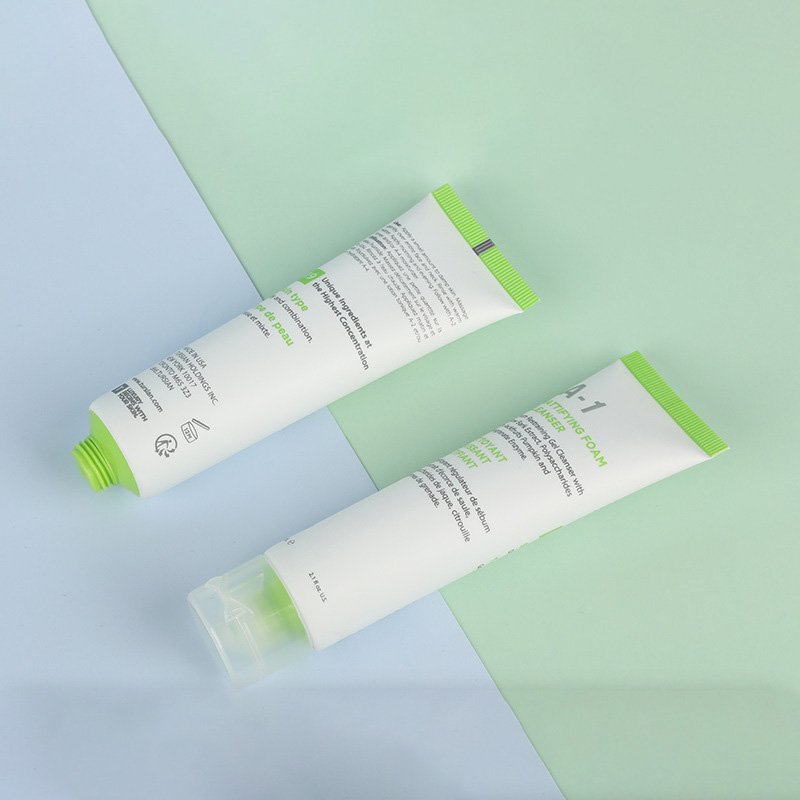
However, “mono-material” does not automatically guarantee recyclability. Factors such as masterbatches (colorants), decorative elements, barrier technologies, the weight ratio of various components, and the acceptance criteria of local recycling systems remain critical.
For instance, certain PE tube technologies—incorporating a limited proportion of EVOH alongside compatible tie layers—have been shown to be compatible with specific recycling streams under defined conditions. Nevertheless, these test results cannot be generalized to all PE/EVOH tubes; the specific structure and the conditions under which testing was conducted are of vital importance.
How do ABL and PBL structures affect recyclability?
Brands often opt for ABL or PBL tubes when specific product protection, aesthetic effects, or performance characteristics are required.
ABL (Aluminum Barrier Laminate) tubes combine plastic layers with an aluminum barrier layer. While this structure provides excellent barrier properties, the combination of aluminum and plastic complicates conventional plastic recycling.
PBL (Plastic Barrier Laminate) tubes utilize a multi-layer plastic structure. Depending on the specific combination of polymers, barrier materials, adhesives, and the proportions of each layer, the compatibility of these structures with particular recycling processes can vary. Importantly, brand owners should not assume that all PBL (plastic barrier laminate) tubes are recyclable, nor should they assume that all PBL structures share the exact same limitations.
When comparing these options, packaging developers should balance the following factors:
- Product protection and required barrier properties.
- Expected shelf life and transport conditions.
- Tube appearance, print quality, and decorative effects.
- Filling and sealing requirements.
- Recyclability requirements for the target market.
Above all, a tube must effectively protect the product throughout its intended use and distribution. Selecting a structure based solely on recyclability claims—without verifying product compatibility—can lead to complications during later stages of development.
Packaging Design Decisions That Can Improve Recyclability
Brand owners do not need to wait until the final stages of product development to consider recyclability. It is generally more effective to discuss these design considerations with packaging suppliers at the very start of a project.
| Design Decisions | What brand owners need to examine | Why it matters |
| Main body material | Can a PE or PP structure meet the formulation requirements? | Helps avoid unnecessary material complexity |
| Shoulder and cap | Can these components be made from compatible materials? | Reduces potential material incompatibility issues |
| Barrier Technology | Is a barrier layer truly necessary? Can compatible alternatives be tested? | Balancing product protection with recyclability considerations |
| Decoration and Color | Are inks, coatings, masterbatches, and metallic effects compatible with the intended recycling system? | Decorative processes may affect sorting efficiency and the quality of recycled materials |
| Labels and Adhesives | Can labels be reduced, made separable, or produced using compatible materials? | Helps lower the risk of contamination during the recycling process |
Details are crucial. For instance, certain dark-colored pigments can interfere with optical sorting, while specific metallic decorations or adhesives may compromise the quality of recycled materials. The exact impact depends on the technologies employed and the local recycling processes in place.
How should beauty brands select the right cosmetic tube?
The best packaging choice is not necessarily the one with the simplest material structure; rather, it is the one that meets the brand’s product requirements while also addressing end-of-life disposal considerations.
Before finalizing a tube design, brands and product development teams should consider the following questions:
- What is the product formulation? Consider viscosity, oils, solvents, active ingredients, and potential material interactions.
- What level of protection does the product require? Determine whether moisture resistance, oxygen barriers, or light-blocking properties are necessary.
- Which market is the product intended for? Recycling collection and sorting systems vary by country and region.
- What aesthetic does the brand desire? Color, surface finish, printing, and shape should all be evaluated in conjunction with material selection.
- Has the complete package been assessed? The tube body, shoulder, cap, barrier layers, decorations, and labels should all be examined.
For example, a facial cleanser and a sunscreen may have different barrier requirements. One formulation might be suitable for a mono-material PE (polyethylene) tube, while another might require a more complex structure. The right choice should be based on compatibility testing and specific application needs.
Collaborate with cosmetic tube manufacturers from the design stage
The recyclability of a tube is not determined solely by the tube body; it is influenced by the specifications of the entire package and the recycling infrastructure of the target market.
Engaging with an experienced cosmetic tube manufacturer early in the product development process allows brands to compare various tube structures—such as PE, PBL (plastic-based laminate), ABL (aluminum-based laminate), and others—before finalizing the packaging design.
A professional supplier should be able to provide guidance on material composition, component selection, barrier requirements, decoration techniques, compatibility with filling and sealing processes, and the information needed to assess recyclability.
If your brand is developing new skincare, personal care, or sunscreen products, you can select the most appropriate cosmetic tube packaging solution based on your specific formulation, target market, and packaging objectives.
The goal is not merely to select a tube that appears recyclable, but to develop packaging that protects the product, delivers the intended brand experience, and aligns with the existing recycling systems in the target market.